


Label paper is a highly engineered material designed for product identification, regulatory labeling, logistics tracking, and brand communication. In modern supply chains, labels are not decorative accessories; they are functional components that ensure traceability, compliance, durability, and operational efficiency. For publicly listed enterprises and multinational manufacturers, selecting the correct label paper directly affects product integrity, customer perception, and risk management.
This guide provides a technically rigorous explanation of label paper, including its structural composition, classification by surface treatment, compatibility with printing technologies, selection methodology, and comparison between paper-based and film-based materials.
Anatomy of Label Paper
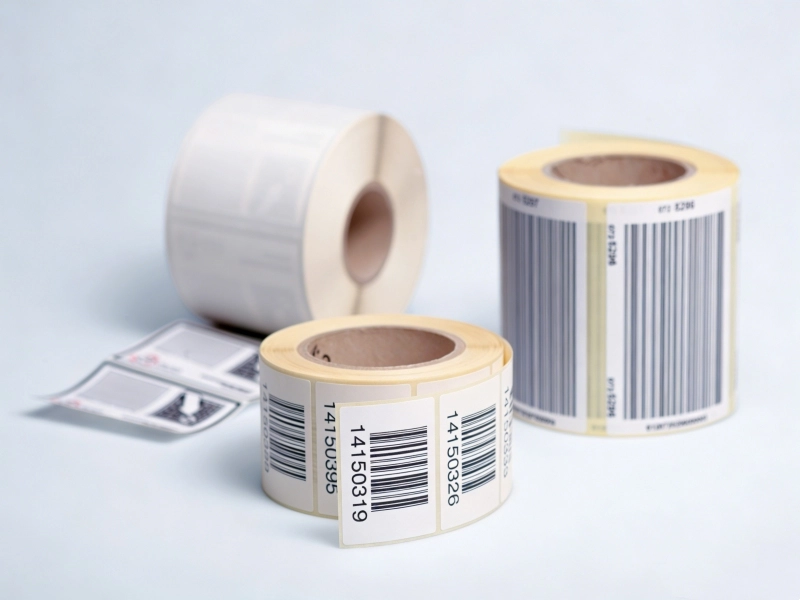
At its most fundamental level, self-adhesive label paper is a laminated structure composed of three integrated layers: the face stock, the adhesive layer, and the release liner. Each layer contributes to performance characteristics such as print clarity, bonding strength, environmental resistance, and dimensional stability.
The face stock is the printable surface. It may consist of coated paper, uncoated paper, cast-coated paper, direct thermal paper, or synthetic films such as polypropylene (PP) and polyester (PET). Surface smoothness, opacity, grammage, and tensile strength determine how well the material accepts ink and how it performs during application. In high-end retail packaging, gloss-coated label paper delivers superior image resolution and color vibrancy, whereas uncoated label paper is frequently used for logistics labels where writability and barcode readability are prioritized.
Beneath the face stock lies the pressure-sensitive adhesive. Adhesive systems are typically acrylic-based or rubber-based. Acrylic adhesives offer long-term aging stability and strong resistance to UV exposure, while rubber-based adhesives provide high initial tack and strong bonding to low surface energy substrates. The adhesive must be selected according to service temperature, application temperature, surface energy of the substrate, and expected environmental exposure. Inadequate adhesive selection is one of the most common causes of label failure in industrial environments.
The release liner forms the bottom layer and protects the adhesive prior to application. Glassine liner is widely used due to its smoothness and dimensional stability, while kraft liners provide strength for manual handling. In automated roll label paper systems, liner stability is critical to maintain die-cut accuracy and prevent misregistration during high-speed dispensing.
Classification of Label Paper by Surface Treatment
Surface treatment significantly influences printability, durability, and appearance. Coated label paper incorporates a mineral or polymer coating designed to enhance ink holdout and image sharpness. Gloss and semi-gloss surfaces are commonly applied in consumer packaging where visual impact is essential. Matte coated surfaces reduce glare and provide a more refined aesthetic, often preferred in premium branding.
Uncoated label paper offers a more natural texture and is easier to write on manually. It is commonly used in warehouse environments, shipping labels, and A4 label paper sheets for office printing. Although less visually striking than coated alternatives, uncoated paper can deliver excellent barcode scanning performance when properly printed.
Cast-coated paper represents a higher-end surface treatment that produces a mirror-like gloss. This material is frequently selected for luxury product labeling due to its exceptional smoothness and reflectivity.
Thermal label paper forms a distinct category within surface classifications. Direct thermal label paper contains a heat-sensitive layer that produces images without ink or ribbon. It is widely used in shipping labels and point-of-sale systems. Thermal transfer label paper, by contrast, requires a ribbon but offers greater resistance to abrasion, chemicals, and long-term fading. The distinction between these two systems is critical in logistics and e-commerce environments where durability requirements vary.
Printing Compatibility
Selecting printable label paper requires careful alignment with printing technology. Offset printing remains prevalent in large-scale commercial production and requires well-coated surfaces for precise ink transfer. Flexographic printing dominates roll label paper manufacturing and supports water-based or UV inks for high-volume packaging applications.
Digital printing technologies, including toner-based and inkjet systems, require specifically treated surfaces to ensure adhesion and image stability. Inkjet printable label paper must incorporate an absorbent coating to prevent ink bleeding, whereas laser-compatible label paper must withstand high fusing temperatures without adhesive migration or sheet curling.
Thermal printing systems, particularly in logistics and retail sectors, depend on either direct thermal label paper or thermal transfer materials. Incorrect material selection can result in poor image density, premature fading, or printer malfunction. In enterprise-scale operations, compatibility testing between label substrate and printing system is a mandatory quality control step.
How to Select the Right Label Paper for Your Application
Professional selection of adhesive label paper involves evaluating substrate type, environmental exposure, durability requirements, regulatory constraints, and application method. The surface energy of the substrate plays a decisive role in adhesive performance. Plastics such as HDPE and polypropylene present low surface energy, requiring high-tack adhesives to ensure reliable bonding.
Environmental conditions must also be assessed. Exposure to moisture, condensation, UV radiation, or temperature extremes can significantly reduce the lifespan of standard paper-based labels. In refrigerated or frozen environments, freezer-grade adhesives and waterproof label paper solutions are essential. In outdoor or industrial chemical settings, synthetic label materials offer superior resistance to abrasion and solvents.
Durability expectations vary widely across industries. Logistics labels may only require short-term legibility, whereas pharmaceutical or industrial labels must remain intact and readable for extended periods. Compliance considerations are equally critical. Food packaging applications may require low-migration adhesives, while thermal labels increasingly demand BPA-free coatings to meet regulatory standards in various markets.
Application method influences liner and adhesive selection. Manual labeling operations tolerate different material characteristics than high-speed automated lines, where consistent release force and dimensional stability are paramount.
Paper-Based vs Film-Based Label Materials
A common question in industrial procurement concerns the difference between paper-based label paper and synthetic film-based materials. Paper-based label paper is cost-effective, offers excellent print clarity, and is suitable for a wide range of consumer packaging applications. It is generally recyclable when compatible adhesives are used. However, paper-based materials are susceptible to moisture and tearing, limiting their use in harsh environments.
Film-based materials, often referred to as synthetic label paper, include polypropylene, polyester, and polyethylene films. These materials provide full waterproof performance, superior tear resistance, chemical stability, and extended outdoor durability. They are widely used in industrial identification, chemical containers, and outdoor equipment labeling. Although more expensive, film-based materials significantly reduce failure risk in demanding conditions.
Choosing between paper and film should not be based solely on cost considerations. Instead, lifecycle performance, risk exposure, and brand protection must be evaluated comprehensively.


